Showing posts with label favorite varieties. Show all posts

Monday, July 30, 2012

Bean There, Done That: A Bean Review

Here's my review of the green bean varieties I planted this year.
Top: Speedy.  Bottom: Royal Burgundy.

I planted three varieties of beans this year; Speedy bush, Royal Burgundy bush, and Fortex pole.  On the whole, all three had excellent germination rates.  All three grew at nearly the same pace, the RB had the first beans ready, followed a day or so later by the Speedy, and several days later by the Fortex.

My observations (remember this is based on my garden for 2012 and may be completed different in your garden or in a different year) of Fortex:  good flavor, smaller harvests over a longer time period, had more pests (japanese bean beetles, leaf beetles).  I planted equal amounts of each bean type, but the Fortex have produced far fewer beans at this point than the other two varieties.  I would recommend them for fresh eating over freezing or canning, because they are long beans that tend to twist and curl and come in small batches over a longer period of time.

Speedy is a bush bean with an upright and very small habit.  From what I could see no pests seemed to care too much for them, the beetles preferred the Fortex, and the slugs preferred the Royal Burgundy.  The beans on these came in all at once and had a very uniform straight 4" pod.  I can't say that the flavors of the beans were noticeably different to me, but I'm not really a bean connoisseur either.  They tasted fine.  I would recommend Speedy specifically for canning.  The pods were consistently straight and just long enough to fit a pint jar, and since they were all harvestable within about a week a large planting would supply all of your canned bean needs in one fell swoop.  

Royal Burgundy  is another bush bean, but with a much more spread out, almost vining, habit.  The slugs loved these, but they were not bothered by the beetles.  More effort is needed in the harvesting of RB because of the tangled vines, it's easy to miss beans hiding in the foliage.  The primary difference from Speedy is that the beans of RB come in over a longer time period, but they are far more productive.  Again, the flavor seems fine to me, I can't say that it lacks compared to the others.  Despite the slug damage I have gotten nearly twice as many beans from RB so far as I have from the other two varieties put together.  The beans are purple and have a tendency to curl and come in all different sizes and shapes.  This habit means i would not suggest them for canning.  But for a frozen bean or for fresh eating they are fine.  

One day's harvest of beans, showing the difference in quantity between varieties.
 So that's my review.  If you have a favorite bean variety I'd love to hear about it, I'm always looking for more to test out.

Thursday, May 31, 2012

Flower Companions: The 411

There are so many elements to gardening that many of them get overlooked in the details of climate and pests and nutrition and plant selection.  One of the oft overlooked elements to gardening is the use of flowers in the food garden.  Whether your food garden consists solely of a rhubarb plant, or two blueberry bushes, or is an entire backyard teeming with vegetables and fruits from Artichoke to Zucchini; adding flowers to it will be worth your while.

Cosmos in bloom
The benefits of flowers in the garden:

-As food! 
-They are pretty
-Attract and provide food/homes for beneficials
-Repel pests, or trap crops
-Reduce weeding
-Reduce erosion
-Cut flowers
-Smell wonderful
-They are pretty!

The only reasons not to plant flowers are the costs; space constraints; or that you hate pretty things. ;)

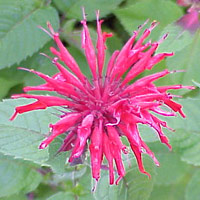
Bee balm or Monarda Didyma or wild bergamot attracts pollinators and makes a tasty tea as well.

So what are some good flower options for your garden?  Nearly any flower will do the job of attracting bees, but if you are looking for flowers that really pack a punch as far as benefiting the garden goes, I have listed a few common flowers below.

Marigold

Marigold:  Marigolds are one of the most commonly thought-of companion flowers.  They are said to deter some common insect pests, including nematodes; marigolds are often companion planted with nightshade plants (i.e. tomato, potato, pepper, and eggplant).  Some species are deer-, rabbit-, and rodent-resistant.  The flower petals African marigold (Tagetes erecta) can be used as a yellow food coloring.  Marigolds are a food plant for butterflies and certain Lepidoptera caterpillars. 
On the down side, marigolds do NOT smell particularly pleasant, and their roots emit antibacterial thiophenes so should never be planted near legume crops.

Potted nasturtium (center)

Nasturtium:  Nasturtiums are my favorite garden flower.  They grow as beautiful flowing carpets of green with bright yellow, orange, and red flowers.  They actually prefer to grow in poor soil; rich soil will give them abundant foliage but reduce flower production.  Nasturtiums make a great ground cover to keep down weeds in areas you are not ready to plant, or around bulbs that won't come up for a while.  They don't require much nutrition, have small root systems, self-sow year after year, and are very inexpensive seeds.  Most importantly, the leaves and flowers are edible (they have a mild peppery taste); and they repel a great many cucurbit pests, like squash bugs, cucumber beetles, and several caterpillars. They have similar benefits for brassica plants, especially broccoli and cauliflower. They serve as a trap crop against black fly aphids. They also attract beneficial predatory insects. 

Red Yarrow

Yarrow:  Yarrow flowers in a flat cluster of tiny white, yellow, or pink blossoms.  Yarrow has been used as a vegetable in the past, the younger leaves can be cooked similar to spinach or added to soups.  It has a sweet, slightly bitter flavor.  It has also been used medicinally as a tonic, and to treat wounds.  Pasture grasses traditionally contained a small proportion of yarrow, because it's leaves were particularly high in certain minerals, thus preventing certain mineral deficiencies in cattle.  It repels bad insects and attracts predatory wasps, ladybugs, and hoverflies.  It improves soil quality and its leaves are considered to be good fertilizer and a beneficial additive to compost.  It is said to improve the health of plants nearby, and starlings use it to line their nests (inhibiting the growth of parasites).  Common Yarrow can be invasive.  Wikipedia has some great information on the extensive history and uses for yarrow.


Sunflower:  Both a beautiful annual flower, and an edible; the sunflower's seeds and oil are eaten, while the leaves can be fed to livestock, and the stems can be used in papermaking.  The seed is often used in bird seed blends.  Sunflower is also used in phytoremediation to extract toxic ingredients from soil, such as lead, arsenic and uranium.  Sunflowers are allelopathic, meaning they inhibit other plant growth.  This can be a good thing!  Plant sunflowers in a sunny area that has major weed problems, or around the outskirts of your garden beds to protect from encroaching weeds.  Don't plant them inside the beds though, the roots exude a substance that will inhibit your plants' growth.  I am seriously considering growing them in my blackberry zone in hopes that they will kill off the remaining blackberries.


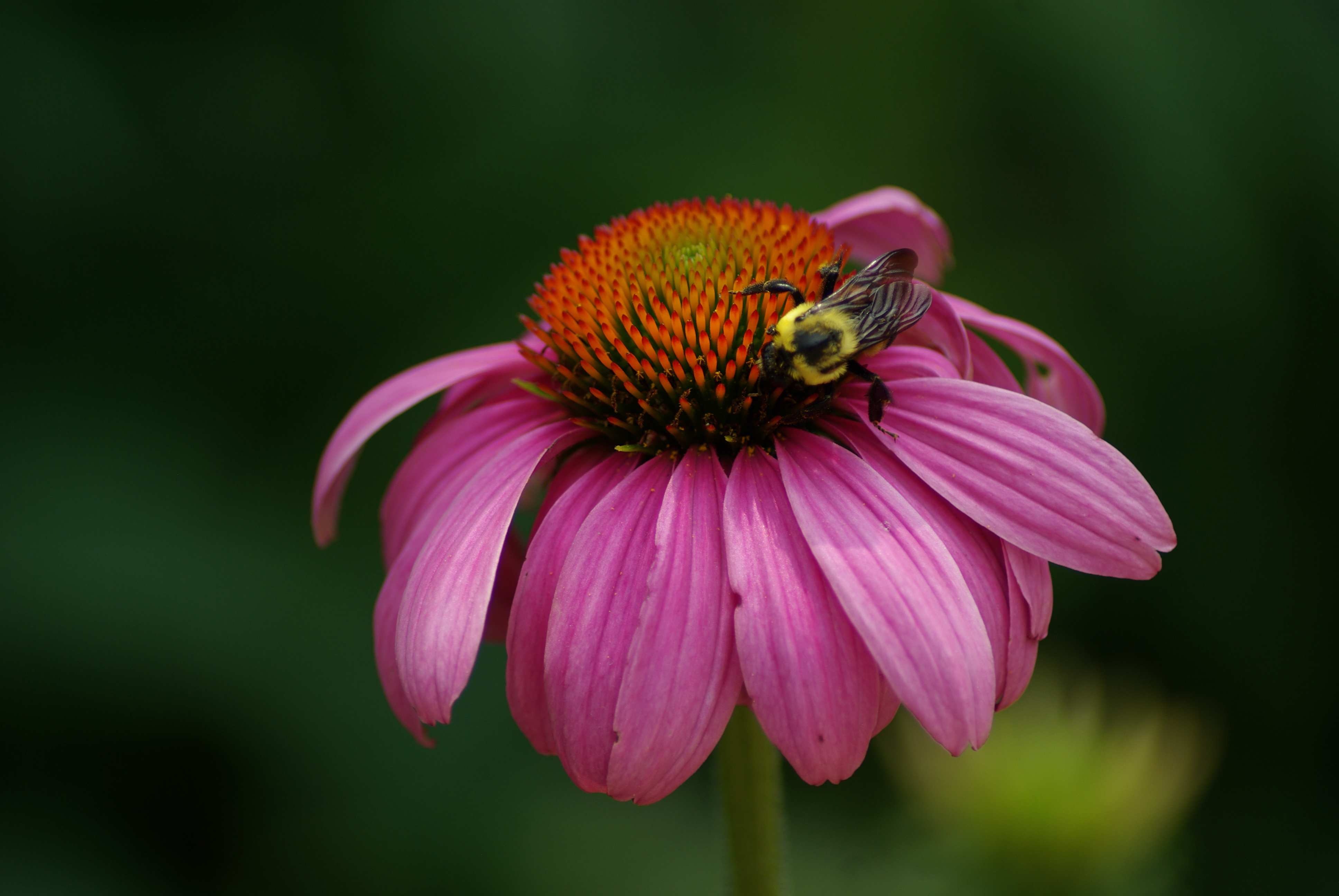
Coneflower (Echinacea):  Echinacea produces large, often purple, daisy-like flowers.  Medicinally it is used primarily as an immune booster, but also for several other purposes.  It also attracts beneficial insects to the garden.


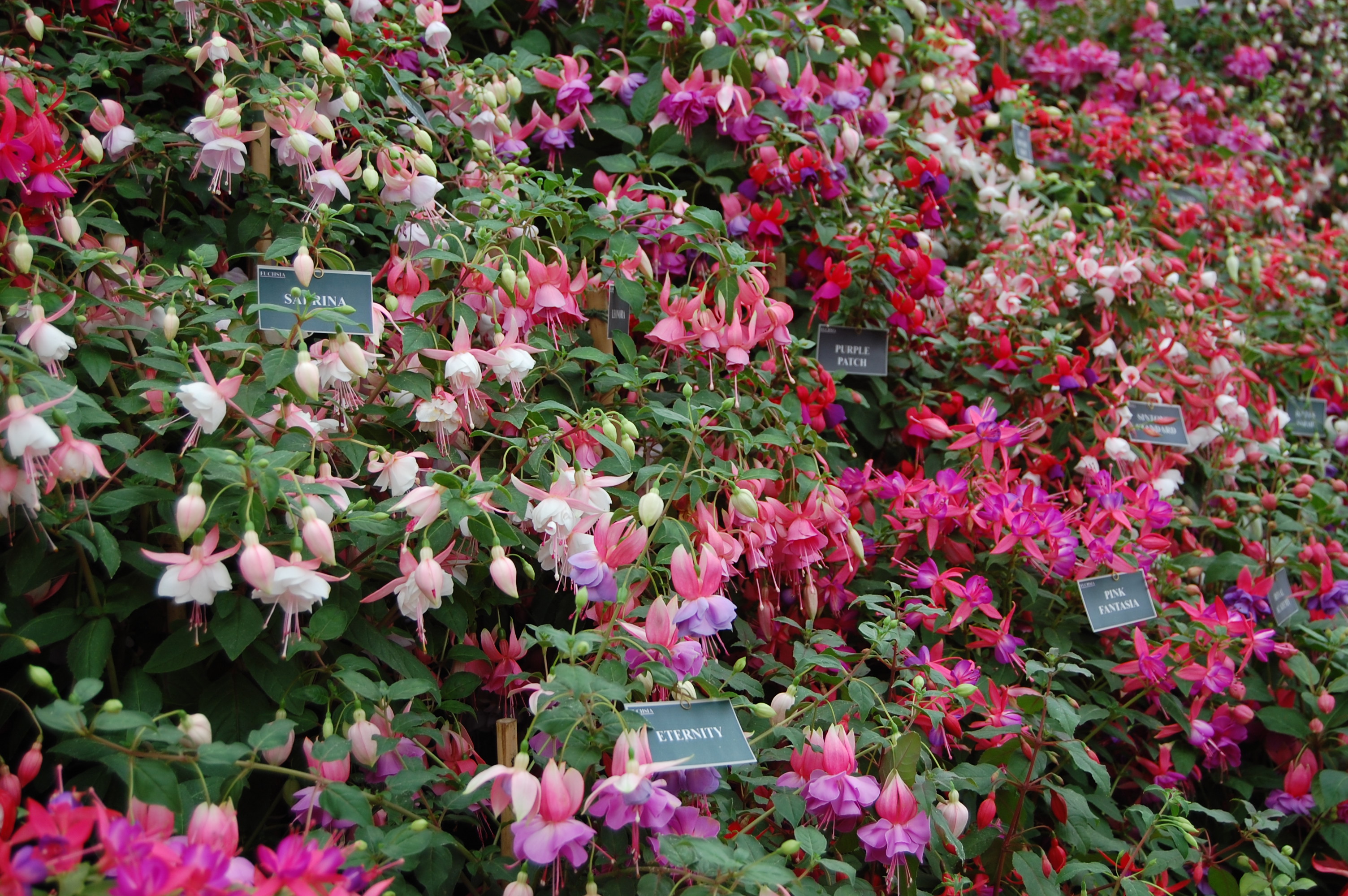
Fuchsia:  In my area fuchsia are commonly grown as trailing container plants, and annuals.  Fuchsia are actually perennial plants, though not especially hardy.  Besides being absolutely gorgeous, fuchsia are major attractors of butterflies, bees, and hummingbirds; they smell great, look better, and if you are going to plant them anyway you may as well do it near your vegetables.

Catmint:  Nepeta sp. include common catnip as well as several other catmints.  I'm sure most people know the purpose of planting catnip as far as cats go.  Catmints also produce very pretty flowers, and are used medicinally for humans.  It contains a chemical that is a strong repellant to mosquitoes, cockroaches, termites, and flies.  Planting it away from your vegetables can keep your cats out of the area, while planting it within the garden can repel certain insects.  While it is a perennial, if your cats are like mine you may need to buy multiple plants each season because they roll on it so often the whole plant dies.


Hollyhock (Alcea sp.)/Mallow (Althaea sp.):  Tall or short, gorgeous, biennial or short-lived perennials.  A beautiful cut flower and attractor of many beneficial species.  Hollyhocks will often self-sow and are very drought-resistant, they are a great way to brighten up a hot, dry corner of your garden.  Ancient peoples used the Althaea species in both medicines and cooking.  They are also considered one of the mainstays of a traditional cottage garden.


Morning Glory:  Not to be confused with Field Bindweed, a perennial species of Morning Glory that is a nasty weed!  Delicate flowers open in the morning and close in the evening, giving the morning glory its name.  It is a slender vining annual, that will quickly spiral its way up a trellis to offer shade to plants, animals or people below.  Morning Glory will happily cover up a chain link fence with a view of your neighbor's backyard and replace it with a view of green leaves and blue, pink, or white flowers.  The trumpet-like cones of the flowers are particularly attractive to hummingbirds and butterflies.


Rose:  Wondrously scented, beautifully flowered.  The hips and petals are edible; they have been used in cooking, perfumery, winemaking, as floral arrangements, and are a symbol of love and beauty.  A rose by any other name would smell as sweet... and would, obviously, attract plenty of pollinators.  But roses have so many pests and diseases, right?  Yes, and no.  Hybrid tea roses are very needy little things that do require much care (and are very commonly found), they have been developed over many years for the showiest blossoms, leaving the plants themselves weak and of poor quality.  The old garden roses, or heritage or historic roses, are far more independent.  They tend to have highly disease-resistant foliage.  Albas, Gallicas, Damasks, Centifolia, Moss, Portland, and China roses are all fairly safe older varieties of rose.  Also the Tea, Bourbon, Hybrid Rugosa, Noisette, Hybrid Musk, and Hybrid Perpetual.  Modern roses are more demanding and include the Hybrid Tea, Pernetianas or Hybrid Foetidas, Polyantha, Floribunda, etc.  Before purchasing a rose to include in your garden take time to do your homework, they are well worth the effort to plant, but if you buy based solely on the picture you may find they are too much work and too sickly to work for you.  (I did this once and was sorely disappointed by the sad sticks with even sadder single blossoms on top, I have since learned my lesson.)


Violet/Pansy/Johnny-Jump-Up/Heartsease:  Viola tricolor actually has over 200 colloquial names.  The wild variety has been cultivated into the many different sizes and colors of pansy we see in nurseries today.  The pansy in its wild form has been used for centuries as medicine, as a plant dye, and the flowers are edible.  They are hardy plants and will survive a short freeze even while blooming.  Pansies are actually biennials, but are often sold the second year and treated as annuals.  They may reseed themselves, but are susceptible to several diseases and a few pests.  They certainly do bring a bright spark of color to the garden early on though, and I can't imagine a Spring without them popping up all over.  The bonus is that pansies are not only pretty, but incredibly cheap!  They do suffer from aphids, but in my mind that makes them a great trap crop. ;)


So, I know I didn't cover all of the great flowers available and all of the great advantages they offer in the veggie garden, but I did cover most of my favorites!  If you have a favorite garden flower that you just couldn't live without, leave me a comment and tell me why it's so great.  (I probably should have included something about Cosmos and Bee Balm, ... but I'm tired!)


Tuesday, April 17, 2012

Let's Talk Tomatoes!

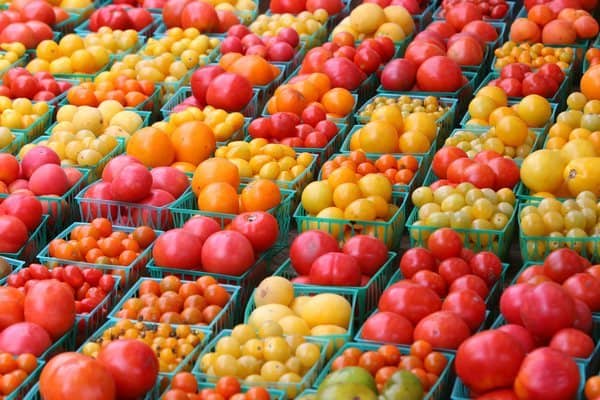
Tomatoes are probably the most popular garden plants, they are the first vegetables most gardeners grow and as they become more experienced they are likely to plant more rather than fewer tomatoes.  There are so many varieties of tomatoes available, in different shapes, sizes, and colors that selecting for a small space or limited budget can be a real challenge.


Tomatoes can be sorted into cherry/slicer/sauce or determinate/indeterminate or ultra early/extra early/early/midseason/late or tomato leafed/potato leafed... like I said, it can be challenging to pick just a few.

From my own experience, and based on your personal needs, I suggest planting at least three tomatoes each year.  If your family likes cherry tomatoes plant a few of them; if they like slicers and cherries, mix it up accordingly; if you plan to do some canning, freezing, or drying do saucing tomatoes as well.

The primary difference between these types is size and dryness.  Cherry tomatoes (or grape, currant, etc.) are generally one to two-bite sized.  Depending on the variety they can be super sweet flavored to tart.  They can be highly wet and juicy like a mandarin orange or thicker skinned and drier (more like a tiny roma).  Generally cherry tomatoes run in the sweet and juicy category, more than the dry and tart.  They come in every possible color; white, yellow, orange, red, pink, purple, brown, green, even striped. 

Slicing tomatoes are what people think of for thick slices of ripe tomato on their burgers.  They are usually much larger than cherries.  Slicers tend toward rich tomato flavor, lots of juice and large seed pockets.  They are delicious for fresh eating but don't make the best sauce since their flavor is not as strong as a saucing tomato and they have less actual flesh; all slicers would make a very watery, seedy sauce.

Saucing tomatoes are meaty, they contain fewer seeds in smaller seed pockets than slicers.  They have much more actual "flesh" to them.  Saucers also tend to be more tart than slicers or most cherries, this tartness is due to a higher acid content (which is necessary for safe canning).  They also make excellent sun-dried tomatoes because of their lower moisture content.

Personally, I never seem to plant enough saucing tomatoes to make full batches of sauce so often add a few slicers or excess cherries to fill it out.  This year I'm hoping to solve that problem.

Determinate tomatoes tend to be shorter in season, they keep a compact size and are preferred for container gardening.  Determinates will grow to a certain size, put on almost their entire crop at once and then stop producing.  These are a great option for canning if you have enough of them because all of the tomatoes are ready at once.  They also are handy because of their shorter season, and are likely to be the first tomatoes of the summer.

Indeterminate tomatoes will grow throughout the summer, and produce fruits one after another, after another up until the weather cools.  They can get up to 10' or even 12' tall, and can produce 15 lbs of fruit or more before cold weather sets in.  Indeterminates tend to outproduce determinates, but the fruits come on a few at a time over the summer.

Remember the difference: Determinates are determined to fruit at once; indeterminates will grow to an indeterminate height.

Choosing based on season can be very confusing.  Here in the Willamette Valley we can easily get 100-120 days of pure sunshine over the summer.  It rains 9 months of the year here, but for the 3 months of summer and even into the Fall a bit we have completely dry sunny days.  Effectively this means by starting seeds inside we can plant even the latest season tomatoes here.  People living in areas with higher altitudes, or higher latitudes may find they can only get fruit from the ultra early, extra early, early, and maybe midseason varieties.  Also those in warmer climates than mine may find that planting in summer gives them bushy plants but little fruit; this is because tomatoes will often stop producing flowers when temperatures are above 80 degrees.  If this causes you trouble try starting plants inside and then moving them into the garden earlier in the year when nighttime temperatures no longer drop below 40.

If you plan to plant a lot of tomatoes try mixing it up and including both early and late season plants.  This should keep you in tomatoes from mid-June until October.  If you are more limited in space give midseason varieties a try, they can be a good way to test whether you should swap to an earlier producer, or if a later one would work in your garden.  In my opinion, the very best tomatoes I grow are late season and I recommend trying to get at least one of them into your garden.

Some other things to consider with tomatoes:
- potato leafed varieties can be great but tend to be more susceptible to late blight and fungal diseases,
- watch for resistant varieties where possible,
- some of the best flavored tomatoes are heirlooms and I highly recommend them,
- crack resistance can be important in containers (where plants are more likely to dry out between watering) and in late season plants (chilling and warming in early fall can cause cracking),
- if the varieties you select don't seem to do well in your garden there are plenty more to choose from!


Here's a quick list of some varieties I've had experience with in my own garden.

Stupice: ultra-early.  I wasn't impressed by these, the tomatoes were fairly small and my harvest was not particularly good but they had a great slicing tomato flavor.  I have heard other people rave about them, but I prefer my slicers to be larger.

Oregon Spring:  extra early, determinate, slicer.  Loved these!  Stumpy 2'-3' plants put on nearly 10 full sized slicer fruit that were delicious, also the earliest of the varieties I planted last year.  Plants were healthy and compact and would likely do very well in containers.

Beaverlodge Plum:  ultra early, determinate, sauce/slice.  These produced great fruit, that were a bit on the juicy side for saucing but very tasty.  Fruit came about the same time as the Oregon Spring ones.  Got a bit tall and probably wouldn't do as well in containers as more compact varieties would.

Oregon Cherry:  cherry, determinate.  These did not produce particularly well even when all the other tomatoes did.  Also, the fruit are not the juicy sweet globes you expect from a cherry tomato, they are more like a tiny roma.  Tart, and more dry.  I was disappointed in this variety.

Sweet Million:  early, indeterminate, cherry.  My favorite so far of the cherry varieties (I've only tried a few though).  Little red spheres are one to two-bite sized, and pop open on the tongue nicely with thin skins, tons of juicy goodness, and a sweet flavor.  The epitome of a cherry tomato.

Chocolate Cherry:  indeterminate, cherry.  Everyone loved these! These little globes are a purplish brown in color, and plants produce well.  Sweet, juicy, thin skinned.  My mom compared their flavor to that of a plum. Yum!

Cuore di Bue (oxheart):  indeterminate, mid- to late season, sauce/slicer.  This is one of my favorites.  Plants have been consistently healthy (planted them for 3 years now).  Fruits are very large, meaty, and flavorful.  They have a great rich flavor to them.  Dry enough for saucing, but moist enough to use as a slicer as well.  I absolutely recommend giving them a try.

Black Plum:  heirloom, indeterminate, mid-season.  I was very impressed with the health and productivity of this variety.  The fruit were plentiful and tasty, with more sweetness to them than the Beaverlodge Plums.  They are a little too juicy for good saucing, but are excellent slicers.  The downside is that most of the fruit were fairly small; which makes using them for sauces a pain as well.

Brandywine (Pink):  heirloom, indeterminate, late season.  Everyone raves about Brandywine, and for good reason.  This potato leaf variety is not a big producer, but what it does produce is often huge! Last year I picked a Brandywine that was as large as a small pumpkin, and weighed in at about 3.5 lbs.  Fruits are large, juicy, sweet, meaty, and rich.  They have the best old fashioned tomato flavor.  However, as late producers a cool summer means fruits may never ripen (they are great as fried green tomatoes too), they are not prolific producers, they are fairly susceptible to fungal diseases, and may not fruit at all if planted to late or too early.  Yes they are finicky, and yes they are worth it.

Silvery Fir Tree: determinate, extra early, slicer.  I tried these last year, the plants were pretty and fairly healthy, and they produced well.  Tomato flavor was average, not great, not bad either.

Legend:  unknown, slicer.  My sister and brother grew these and said they did well and were tasty, but mine grew a healthy plant that only produced about 3 tomatoes.  Though the flavor was good, and the size was decent, I wasn't impressed enough to grow them again.

This year I will be trying a few new varieties as well as my old favorites.  Pineapple caught my eye and I'm hoping it turns out to be as great as it looks; with great big yellow fruit with pink striping inside.  San Marzano Gigante 3 is a large saucer; I'm still looking for the perfect saucing tomato and this year I'll give San Marzano a shot, the larger fruit will hopefully make all the skinning and chopping go faster.  Zebra Cherry is a new cherry tomato I'm trying this year with gorgeous striping; if it's productive and has a good flavor I may recommend it next year.  Indigo Rose: this one just struck me as super cool and I'm willing to give it a chance; a main season slicer that is indigo in color.  I'm curious about the flavor of this one and would be very excited if it turned out to have a sweet, almost blueberry-like flavor (not likely, but I can dream).


What are some of your favorite varieties of tomato to grow and why?  What are your least favorite?  (I'm always on the lookout for help narrowing my options.