Showing posts with label ladybug. Show all posts

Friday, August 3, 2012

Woohoo! First Tomato of the Year

In all its glory...
 Picked my first ripe tomato today, it's the Oregon Spring one that's been hanging around for over a month.  In a normal year the first tomato would be picked in mid- to late June.  This has not been a normal year.  On the plus side it weighed in at 7.5 ounces.  Also the two volunteer cherry tomatoes I left in the ground still haven't ripened anything, so I don't think my late planting really affected the other tomatoes; they are right on par with their volunteer cousins.  It would seem that the weather alone has been responsible for the tomato tardiness. 

Tomato and the first two pickling cucumbers.
 The pickling cucumbers are finally beginning to produce, not a lot so far.  I have a dozen plants, but if they don't start doing better i will never have enough cukes at once to pickle.  The slicing cucumber is cranking out fruit faster than they can ripen, I'm guessing I'll have about 3 cukes ready to pick tomorrow and more a few days after that.

I didn't take a photo of the onions i pulled earlier this week, nor did I weigh them, they are curing in the laundry room/grow room/pantry and once cured they will be weighed in and photographed.  I only pulled the ones with good sized bulbs and developed skins, which accounted for about a quarter of what was planted.

Herbs (this basket holds about 2 gallons)
Also, above is the photo of the herbs I trimmed the other day.  Most of this is rosemary, which is buried under the thyme, sage, spearmint, and lavender.  The oregano wasn't big enough for trimming yet, and the cats have mauled the catnip too much to harvest.  All of these herbs were lightly rinsed (to remove spiders and dust), blotted dry, bundled, tied up, and hung to dry.  Once they are crispy i will strip them from their stems, crumble them a bit, then mix up seasonings or bag and freeze them, or fill my nearly empty spice jars with them.  I am a bit disappointed the oregano didn't grow more, I was hoping not to have to buy it for making Italian Seasoning Mix.  The mint and lavender will likely be saved for potpourri or teas, since I don't do much cooking with them.

The one other major thing I did was pull a few problem plants: the last celery that I left to flower for the beneficial bugs, the cilantro (it had long ago gone to flower and was seriously shading out the rhubarb and some peppers) and the dill that was completely infested with aphids and ladybugs.  I let the dill stay in the garden long enough for the ladybug eggs to hatch, and the nymphs to grow into adults, but they were failing at eating enough aphids fast enough so I moved them onto other plants and tossed the buggy dill.  I'm disappointed that I lost the dill before the cucumbers were ready for harvest though, i had hoped to use my own dill for pickling.  The nasturtiums have done their job of black-fly-aphid-traps so well that the aphids are killing them and moving onto other plants nearby, so I pulled a few of the most infested nasturtiums and left the others to continue their work.  Hopefully the aphids will stay out of the other plants again and move into the healthy nasturtiums.


Thursday, May 31, 2012

Flower Companions: The 411

There are so many elements to gardening that many of them get overlooked in the details of climate and pests and nutrition and plant selection.  One of the oft overlooked elements to gardening is the use of flowers in the food garden.  Whether your food garden consists solely of a rhubarb plant, or two blueberry bushes, or is an entire backyard teeming with vegetables and fruits from Artichoke to Zucchini; adding flowers to it will be worth your while.

Cosmos in bloom
The benefits of flowers in the garden:

-As food! 
-They are pretty
-Attract and provide food/homes for beneficials
-Repel pests, or trap crops
-Reduce weeding
-Reduce erosion
-Cut flowers
-Smell wonderful
-They are pretty!

The only reasons not to plant flowers are the costs; space constraints; or that you hate pretty things. ;)

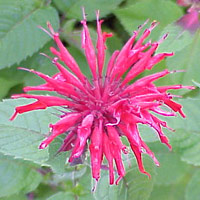
Bee balm or Monarda Didyma or wild bergamot attracts pollinators and makes a tasty tea as well.

So what are some good flower options for your garden?  Nearly any flower will do the job of attracting bees, but if you are looking for flowers that really pack a punch as far as benefiting the garden goes, I have listed a few common flowers below.

Marigold

Marigold:  Marigolds are one of the most commonly thought-of companion flowers.  They are said to deter some common insect pests, including nematodes; marigolds are often companion planted with nightshade plants (i.e. tomato, potato, pepper, and eggplant).  Some species are deer-, rabbit-, and rodent-resistant.  The flower petals African marigold (Tagetes erecta) can be used as a yellow food coloring.  Marigolds are a food plant for butterflies and certain Lepidoptera caterpillars. 
On the down side, marigolds do NOT smell particularly pleasant, and their roots emit antibacterial thiophenes so should never be planted near legume crops.

Potted nasturtium (center)

Nasturtium:  Nasturtiums are my favorite garden flower.  They grow as beautiful flowing carpets of green with bright yellow, orange, and red flowers.  They actually prefer to grow in poor soil; rich soil will give them abundant foliage but reduce flower production.  Nasturtiums make a great ground cover to keep down weeds in areas you are not ready to plant, or around bulbs that won't come up for a while.  They don't require much nutrition, have small root systems, self-sow year after year, and are very inexpensive seeds.  Most importantly, the leaves and flowers are edible (they have a mild peppery taste); and they repel a great many cucurbit pests, like squash bugs, cucumber beetles, and several caterpillars. They have similar benefits for brassica plants, especially broccoli and cauliflower. They serve as a trap crop against black fly aphids. They also attract beneficial predatory insects. 

Red Yarrow

Yarrow:  Yarrow flowers in a flat cluster of tiny white, yellow, or pink blossoms.  Yarrow has been used as a vegetable in the past, the younger leaves can be cooked similar to spinach or added to soups.  It has a sweet, slightly bitter flavor.  It has also been used medicinally as a tonic, and to treat wounds.  Pasture grasses traditionally contained a small proportion of yarrow, because it's leaves were particularly high in certain minerals, thus preventing certain mineral deficiencies in cattle.  It repels bad insects and attracts predatory wasps, ladybugs, and hoverflies.  It improves soil quality and its leaves are considered to be good fertilizer and a beneficial additive to compost.  It is said to improve the health of plants nearby, and starlings use it to line their nests (inhibiting the growth of parasites).  Common Yarrow can be invasive.  Wikipedia has some great information on the extensive history and uses for yarrow.


Sunflower:  Both a beautiful annual flower, and an edible; the sunflower's seeds and oil are eaten, while the leaves can be fed to livestock, and the stems can be used in papermaking.  The seed is often used in bird seed blends.  Sunflower is also used in phytoremediation to extract toxic ingredients from soil, such as lead, arsenic and uranium.  Sunflowers are allelopathic, meaning they inhibit other plant growth.  This can be a good thing!  Plant sunflowers in a sunny area that has major weed problems, or around the outskirts of your garden beds to protect from encroaching weeds.  Don't plant them inside the beds though, the roots exude a substance that will inhibit your plants' growth.  I am seriously considering growing them in my blackberry zone in hopes that they will kill off the remaining blackberries.


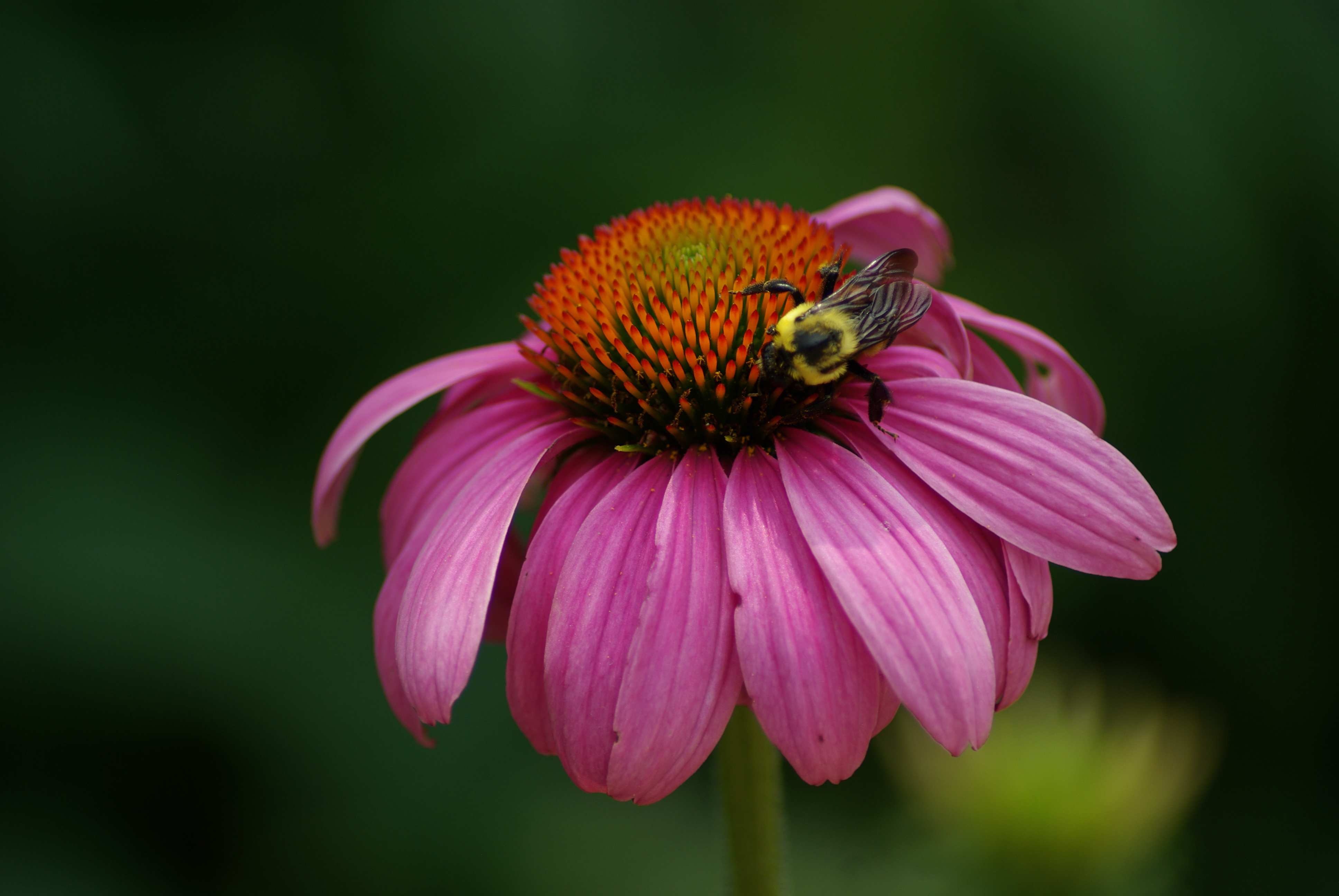
Coneflower (Echinacea):  Echinacea produces large, often purple, daisy-like flowers.  Medicinally it is used primarily as an immune booster, but also for several other purposes.  It also attracts beneficial insects to the garden.


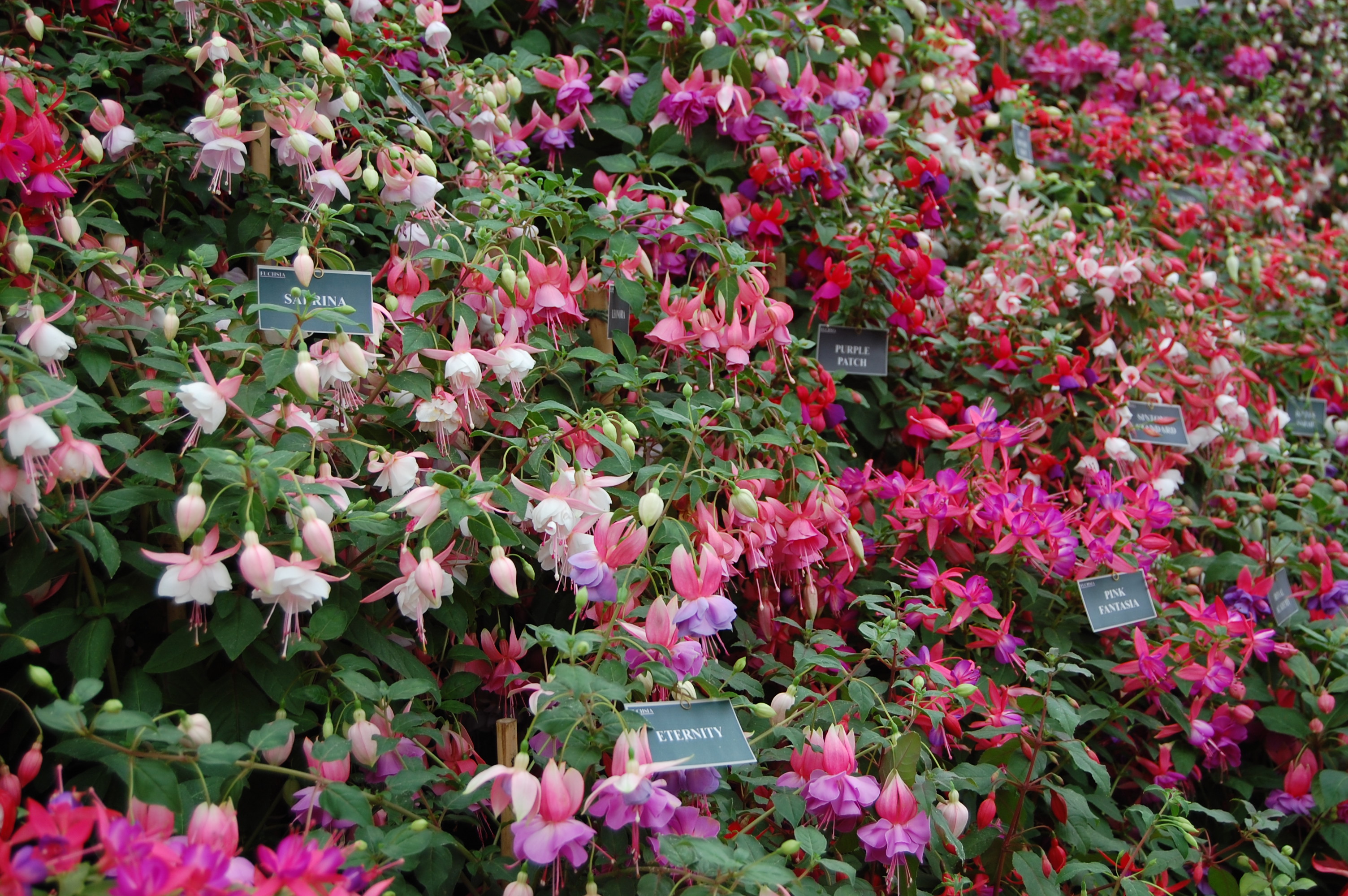
Fuchsia:  In my area fuchsia are commonly grown as trailing container plants, and annuals.  Fuchsia are actually perennial plants, though not especially hardy.  Besides being absolutely gorgeous, fuchsia are major attractors of butterflies, bees, and hummingbirds; they smell great, look better, and if you are going to plant them anyway you may as well do it near your vegetables.

Catmint:  Nepeta sp. include common catnip as well as several other catmints.  I'm sure most people know the purpose of planting catnip as far as cats go.  Catmints also produce very pretty flowers, and are used medicinally for humans.  It contains a chemical that is a strong repellant to mosquitoes, cockroaches, termites, and flies.  Planting it away from your vegetables can keep your cats out of the area, while planting it within the garden can repel certain insects.  While it is a perennial, if your cats are like mine you may need to buy multiple plants each season because they roll on it so often the whole plant dies.


Hollyhock (Alcea sp.)/Mallow (Althaea sp.):  Tall or short, gorgeous, biennial or short-lived perennials.  A beautiful cut flower and attractor of many beneficial species.  Hollyhocks will often self-sow and are very drought-resistant, they are a great way to brighten up a hot, dry corner of your garden.  Ancient peoples used the Althaea species in both medicines and cooking.  They are also considered one of the mainstays of a traditional cottage garden.


Morning Glory:  Not to be confused with Field Bindweed, a perennial species of Morning Glory that is a nasty weed!  Delicate flowers open in the morning and close in the evening, giving the morning glory its name.  It is a slender vining annual, that will quickly spiral its way up a trellis to offer shade to plants, animals or people below.  Morning Glory will happily cover up a chain link fence with a view of your neighbor's backyard and replace it with a view of green leaves and blue, pink, or white flowers.  The trumpet-like cones of the flowers are particularly attractive to hummingbirds and butterflies.


Rose:  Wondrously scented, beautifully flowered.  The hips and petals are edible; they have been used in cooking, perfumery, winemaking, as floral arrangements, and are a symbol of love and beauty.  A rose by any other name would smell as sweet... and would, obviously, attract plenty of pollinators.  But roses have so many pests and diseases, right?  Yes, and no.  Hybrid tea roses are very needy little things that do require much care (and are very commonly found), they have been developed over many years for the showiest blossoms, leaving the plants themselves weak and of poor quality.  The old garden roses, or heritage or historic roses, are far more independent.  They tend to have highly disease-resistant foliage.  Albas, Gallicas, Damasks, Centifolia, Moss, Portland, and China roses are all fairly safe older varieties of rose.  Also the Tea, Bourbon, Hybrid Rugosa, Noisette, Hybrid Musk, and Hybrid Perpetual.  Modern roses are more demanding and include the Hybrid Tea, Pernetianas or Hybrid Foetidas, Polyantha, Floribunda, etc.  Before purchasing a rose to include in your garden take time to do your homework, they are well worth the effort to plant, but if you buy based solely on the picture you may find they are too much work and too sickly to work for you.  (I did this once and was sorely disappointed by the sad sticks with even sadder single blossoms on top, I have since learned my lesson.)


Violet/Pansy/Johnny-Jump-Up/Heartsease:  Viola tricolor actually has over 200 colloquial names.  The wild variety has been cultivated into the many different sizes and colors of pansy we see in nurseries today.  The pansy in its wild form has been used for centuries as medicine, as a plant dye, and the flowers are edible.  They are hardy plants and will survive a short freeze even while blooming.  Pansies are actually biennials, but are often sold the second year and treated as annuals.  They may reseed themselves, but are susceptible to several diseases and a few pests.  They certainly do bring a bright spark of color to the garden early on though, and I can't imagine a Spring without them popping up all over.  The bonus is that pansies are not only pretty, but incredibly cheap!  They do suffer from aphids, but in my mind that makes them a great trap crop. ;)


So, I know I didn't cover all of the great flowers available and all of the great advantages they offer in the veggie garden, but I did cover most of my favorites!  If you have a favorite garden flower that you just couldn't live without, leave me a comment and tell me why it's so great.  (I probably should have included something about Cosmos and Bee Balm, ... but I'm tired!)


Monday, May 21, 2012

Harvest Monday: 5/21/12

I actually harvested this on Sunday, but wanted to take part in Harvest Monday for once.  This week's major harvest was kale, Swiss chard, and onions.  The kale in the whiskey barrel has been struggling and just not keeping up with the kale in the beds, since I didn't amend the soil in the barrels at all it was understandable.  So I did the merciful thing and just pulled it out.  Which actually worked out well since it was raining and I felt like making some soup for dinner.  Zuppa Toscana was the soup of the day; I did fancy it up a bit with the two Walla Walla onions I have been trying to get a bulb from for the past three years, a few good sized chard leaves, the kale, and some beautiful oyster mushrooms and new potatoes from the farmer's market.  Served with a hearty loaf of sourdough, also from the farmer's market, it made the perfect treat on a wet Spring day.
Sunday's harvest, onions, kale, and chard.
I also took a little time to thin down the celery, when I transplanted them they were packed into their containers pretty tightly.  Now that it's obvious which plants are going to do well I yanked out the littler ones.  After rinsing them well I tossed them into my stock bag in the freezer.

Celery thinnings.
 A whole different kind of harvest was going on yesterday as well.  I spotted a ladybug flying past, tracked him to the shed, picked him up and set him on my aphid-plagued mini rose.  I actually spent more than a few minutes watching him harvest aphids like a kid gobbles candy on Halloween.  An hour later he was gone, but I'm hoping he decided it was worth his while to stay in the vicinity.

Phone camera does not do justice to this little guy.
 **Harvest Monday is a day to show off your harvests, hosted by Daphne's Dandelions, stop by to see who else has posted this week, or add your garden harvest to the list.  Have a great Monday everyone!

Monday, February 20, 2012

A Bit About Bugs

While doing some weeding of the garden beds in preparation for my first spring plantings I came across some bugs (well grubs) of an unknown type.  By the way, this is a great time to pull up any dandelions, dock and other taproot weeds since the soil is still very soft and moist; it's more likely you will get the entire root out rather than have it break off and re-sprout.  The grubs I found were gray or dirty white with dark heads, I also found a green grub or caterpillar that was hanging around in the weeds.  I have no idea what they are, after some internet investigations the best answer I could find was cutworms.  Since I'm not certain of this I tossed them over the fence into the empty lot.  If they are harmful at least they are out of the garden, if not, I wish them the best in their new home.
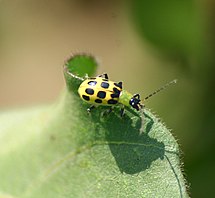
I am considering picking up some beneficial nematodes to help manage soil dwelling pests.  One reason for this is that I spotted two cucumber beetles at the end of last summer, bright beautiful little green ladybug-like beetles with 12 black spots.  While they are very pretty, these beetles are a real problem in the garden.  They eat just about any vegetable they can get to, then lay eggs in the soil, when larva hatch they too will feast on vegetables and they spread bacterial wilt and squash mosaic virus.

Spotted cucumber beetle


Cucumber beetles also have a striped species that looks similar but the spots are instead stripes that run from the head to the rear.  These guys are a real danger to a garden.  Unfortunately they are also a challenge to be rid of.  Parasitic wasps can be helpful, if you don't know how to get these, try planting flowers that will attract them to the garden.  Tiny nectar-filled flowers such as thyme, savory, dill, cilantro, parsley, yarrow, candytuft, verbena, sweet allysum and goldenrod.  If you spot caterpillars or other pest bugs with tiny white sacs attached to them leave them alone!  The sacs are the cocoons of parasitic wasps and the pests will die when they emerge, spawning a new generation of pest killers.  Another cucumber beetle predator is the soldier bug, "leather"-backed firefly-like bugs that can eat up to 100 bugs a day.  Soldier beetles are attracted to pollen and nectar filled flowers and particularly like hydrangea, goldenrod and milkweed.  Tachinid flies are also effective at managing beetle populations, and are another type of parasitoid.  Tachinids are not as preferential as other biological controls and will just as likely parasitize butterfly caterpillars.  Having a large garden variety will help to attract these pest managers.

Beneficial nematodes are microscopic roundworms that live in soil and prey on soil dwelling insects.  They are effective controls of fleas, ants, termites, roaches, flies, grubs; yet they are harmless to humans, pets, and our soil-dwelling friends the earthworms.  You can try to attract nematodes to the garden by adding plenty of compost and having rich organic soil, but this is a grab bag; you could just as easily attract pest nematodes.  It may be wiser to purchase a small package of beneficial nematodes to spread through your garden instead.

Since I live in a mobile home park that was built over an orchard in the 60s, I suspect this area was heavily treated with pesticides in the past and the likelihood of it supporting its own nematode population is fairly slim.  So I will most likely purchase them from a supplier and sow them in and around my garden and yard.  Ants are a major issue in our area, and I imagine if we had a natural nematode population that would not be the case. 

I also plan to sow a package of "Beneficial Bug Mix" flowers in the empty lot next door.  My garden lacks space to add a lot of these plants but I can at least use them to attract beneficials to the vicinity of the garden itself. 
If you plan to attract beneficials to your garden to help with pest management, you should keep a few things in mind:

-Don't spray! Insecticides will kill your beneficials, birds that eat pests, and the pests.  Let the birds and bugs do their jobs and handle the pests for you.

-Identify before you destroy.  It does you no good to attract ladybugs to your garden and then kill their nymphs because you thought they were pests.  Take time to identify bugs, if you can't then move them out of the garden and hope for the best.

-Provide what they need.  Food and shelter in the form of flowering plants, and water.  Your bugs need to drink too.

-Putting out a suet block or feeder of quality untreated bird seed will attract a variety of birds to your garden, many of which also eat pests.  You may find you have a lot of millet to pull up later in the year though.  You can also grow sunflowers and save the seed each year to offer the birds.

The garden is an environment all its own, keeping a balance between flowers and food, pests and beneficials will allow it to transform into its own natural environment that maintains its own balance rather than needing constant interventions. 


Friday, January 20, 2012

Hooray for Tiny Black Alligators!

Thought I'd share a little snippet of information I learned last summer.

In early June my celery plants and a few others bolted and started to put out flowers, since I didn't plan to collect seed from these plants I decided to pull them out to let more light get to the plants around them.  When I brought the celery plants inside to rinse the remaining usable stalks and put them in the fridge I noticed lots of tiny black alligators crawling around on the plants.  After getting severely weirded out by the creepy crawlies and washing them down the sink I figured I should look them up to find out if I had a pest problem that needed dealing with.

Luckily for me there are lots of websites with information on insect identification.  As it turns out the tiny black alligators are ladybug nymphs, the scourge of aphids.  And I had washed them down the drain!  These were not pests, they were beneficials who's home I had uprooted, and then drowned.
  Here's a link with some great photos of what these little critters look like
Well, I learned my lesson, from now on I will identify any and all bugs I find before I kill them. :(

As it turns out, ladybugs like to lay their eggs on Umbrelliferae species.  These include carrots, celery, queen anne's lace, and most other flowers that bloom in flattened umbrella-like clusters of small flowers.  This year, I'll let the celery flower, even if I don't need the seed.  I also plan to sneak into the empty lot next door and disperse some Beneficial Bug flower mix, if it's going to be full of weeds, they may as well be habitat for helpful insects.

Learn about the habitat and food needs of beneficials to keep a healthy organic garden. If you provide homes, food, and water they will return the favor with pollination and pest management.