Showing posts with label pests. Show all posts

Tuesday, August 7, 2012

Cucumber Culture

Cucumbers are one of the best summertime garden treats.  They are so low calorie that I've heard they contain fewer calories than you burn digesting them, making them a great diet snack. 


In the garden cucumber plants are most likely to suffer from powdery mildew, this can be prevented by watering them only at the soil level, early in the day, and avoiding touching the leaves when wet.  Another major contributor to powdery mildew is planting too early, give the soil plenty of time to warm up and your plants will be in much better health.  Cucumber beetles can be a major pest problem, and spread bacterial wilt as well.  Pick off beetles and destroy them daily.  Watch for signs of bacterial wilt: unexplained wilting and sticky stringy sap inside stems.  If you discover a plant infected with bacterial wilt remove it immediately to prevent spreading the disease.  Avoid planting other cucurbits in the infected area for at least one year, preferably three to four years.  You can also place black plastic over the infected soil between planting seasons to heat the soil and kill off the disease and it's carriers, cucumber beetle grubs. 

Female flower with tiny cucumber ovary at base.
Cucumbers grow sturdy, spiny vines and depending on the type will put out either male, female, hermaphroditic, or male AND female flowers.  Gynoecious cucumbers have all female flowers that will not pollinate if there is no male flowered plant near them.  Often gynoecious seed packets include one or two male seeds that are tinted gray or black, to insure you will have a male plant in your garden.  Hermaphroditic cucumbers have both male and female parts on each flower and are capable of pollinating each other and their own flowers.  Monoecious cucumbers have separate male and female flowers on the same plant.  Similar to most squashes, these plants put on several male flowers before they begin to produce female flowers.  Parthenocarpic cucumbers have the ability to set fruit without pollination.  Parthenocarpic varieties are excellent for greenhouse or indoor growing where pollinators may be non-existent.

Male flower with no ovary at the base.
Of the varieties I planted this year, Marketmore 97 and Bush Pickle are both monoecious, while Lemon cucumber is hermaphroditic.  I'm not sure what the National Pickling is, but it appears to have both male and female flowers so I am going with monoecious.

Traditionally cucumbers trail across the ground, but by trellising them or wrapping them around a tomato cage you can reduce the risk of soil-borne disease reaching the leaves.  You can also look for bush varieties that take up less space if you are container gardening or don't have room for the large vining varieties.

Besides the different varieties of reproduction in cucumbers you also have choices based on what you plan to do with your cucumbers.  Slicing cucumbers are larger and tend to be better eaten raw.  Pickling cucumbers are grown for canning as pickles.  They are smaller, often with a tougher skin that protects the fruit during the canning process and becomes softer after brining and canning.  Canning a large slicing cucumber would just give you a mushy pickle.  Often pickling cucumbers produce larger amounts in a shorter time frame too, to accommodate picklers. 

There are also several unusual varieties to try out, such as the Lemon cucumber which develops as a yellowish fruit about the size and shape of a small orange.  Or the Mexican Sour Gherkin, a bite-sized cucumber with a hint of citrus flavor to them.

In conclusion, cucumbers are worth the space in a small garden, or in a pot on the patio; delicious, healthy, outstanding producers, and a cool treat in the summertime.  Give them a shot and don't be surprised if you find yourself wondering what to do with all of them! 

*Next up: What To Do With All These Cucumbers*

Friday, August 3, 2012

Woohoo! First Tomato of the Year

In all its glory...
 Picked my first ripe tomato today, it's the Oregon Spring one that's been hanging around for over a month.  In a normal year the first tomato would be picked in mid- to late June.  This has not been a normal year.  On the plus side it weighed in at 7.5 ounces.  Also the two volunteer cherry tomatoes I left in the ground still haven't ripened anything, so I don't think my late planting really affected the other tomatoes; they are right on par with their volunteer cousins.  It would seem that the weather alone has been responsible for the tomato tardiness. 

Tomato and the first two pickling cucumbers.
 The pickling cucumbers are finally beginning to produce, not a lot so far.  I have a dozen plants, but if they don't start doing better i will never have enough cukes at once to pickle.  The slicing cucumber is cranking out fruit faster than they can ripen, I'm guessing I'll have about 3 cukes ready to pick tomorrow and more a few days after that.

I didn't take a photo of the onions i pulled earlier this week, nor did I weigh them, they are curing in the laundry room/grow room/pantry and once cured they will be weighed in and photographed.  I only pulled the ones with good sized bulbs and developed skins, which accounted for about a quarter of what was planted.

Herbs (this basket holds about 2 gallons)
Also, above is the photo of the herbs I trimmed the other day.  Most of this is rosemary, which is buried under the thyme, sage, spearmint, and lavender.  The oregano wasn't big enough for trimming yet, and the cats have mauled the catnip too much to harvest.  All of these herbs were lightly rinsed (to remove spiders and dust), blotted dry, bundled, tied up, and hung to dry.  Once they are crispy i will strip them from their stems, crumble them a bit, then mix up seasonings or bag and freeze them, or fill my nearly empty spice jars with them.  I am a bit disappointed the oregano didn't grow more, I was hoping not to have to buy it for making Italian Seasoning Mix.  The mint and lavender will likely be saved for potpourri or teas, since I don't do much cooking with them.

The one other major thing I did was pull a few problem plants: the last celery that I left to flower for the beneficial bugs, the cilantro (it had long ago gone to flower and was seriously shading out the rhubarb and some peppers) and the dill that was completely infested with aphids and ladybugs.  I let the dill stay in the garden long enough for the ladybug eggs to hatch, and the nymphs to grow into adults, but they were failing at eating enough aphids fast enough so I moved them onto other plants and tossed the buggy dill.  I'm disappointed that I lost the dill before the cucumbers were ready for harvest though, i had hoped to use my own dill for pickling.  The nasturtiums have done their job of black-fly-aphid-traps so well that the aphids are killing them and moving onto other plants nearby, so I pulled a few of the most infested nasturtiums and left the others to continue their work.  Hopefully the aphids will stay out of the other plants again and move into the healthy nasturtiums.


Thursday, March 15, 2012

Mother Nature's Got Me Singin' the Blues

I'm singin the pouring down rain blues.  It was supposed to be sunny next Monday and Tuesday, but after checking the forecast this morning I'm not going to hold my breath waiting for the sun.  My garden beds are so wet there are puddles on top of them, luckily they drain well and one good warm day will leave them workable. 

Meanwhile, I ordered some beneficial nematodes that should arrive soon.  I figured the nematodes couldn't hurt, and I have some concerns regarding the spotted cucumber beetles I saw last summer.  If they laid eggs in my soil I'd better have some defenses in place; I don't really have enough room for good crop rotation so have to use other options to control problems.

I also took some advice on my seedlings and spritzed them with 1/2 strength fish emulsion to give them a boost, one week later it seems to be paying off since they are working on putting out new leaves and aren't showing signs of nutrient shortage.  I ran a quick soil test too, to see where things are in this third year of gardening in the same soil.  I usually add some compost during the growing season to keep the plants happy, but this is the first time I've actually tested the soil to see how it's holding up.  Turns out that my soil is low on Nitrogen and Phosphorus, but a little high in Potassium. 

Nitrogen is essential to good stem and leaf growth; phosphorus is for root, seed, flower, fruit growth; and potassium is for root growth and overall plant health.  So my soil is all set to keep plants alive, but they may not grow well, or fruit/flower/seed well.  From what I can find, it looks as though my best bets for keeping things growing well are a starter of fish emulsion to get them growing followed by compost added to the beds, and fish and/or kelp meal to add micronutrients and more phosphorus.  I really aught to just dish out the cash for a professional soil test to find out what levels of micronutrients and microbes my garden has.  I know it has more than its fair share of slugs, and it's no wonder with all of this rain.

Whatever the case, I am getting more and more disappointed by the weather and feel like I'm falling way behind on things.  Luckily I do have seedlings that are doing great and can stay inside longer if needed, it's worth the late start to protect them against powdery mildew (the scourge of too early plantings).  I just need them out of the house before they get too big!

Friday, March 2, 2012

Onion Culture

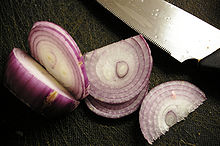
Allium cepa a.k.a. the bulb, common, or garden onion, is the most widely cultivated species of AlliumAllium cepa only exists in cultivation; though there are a few Allium species in the wild, often referred to as "wild onions" they are NOT Allium cepa

Traces of onion have been found in Bronze Age settlements dating as far back as 5000 BC (about the time the potato was being developed on the other side of the world; because what is a potato without an onion?).  It is uncertain if these traces were of "cultivated" onion; true cultivated onions can be traced to about two thousand years later in ancient Egypt, leeks and garlic also had their beginnings at this time.  Ancient Egyptians believed the onion's spherical shape and concentric rings represented eternal life.  Traces of onion have been found in Egyptian burial chambers and it's believed that the workers who built the pyramids ate onions and radishes.  In Greece, onion was believed to lighten the balance of the blood.  in Roman culture, gladiators were rubbed with onion to firm up their muscles.  In the Middle Ages they were so important they were used to pay rent, and given as gifts.  Medicinally onions have been used to treat constipation, erectile dysfunction, infertility, headaches, coughs, snake bites, and hair loss.  Columbus brought cultivated onions with him to the Americas, only to find out later that the natives were already using wild onion for everything from food, to dyes, to toys.

You should never give onion to pets or other animals as it may poison them.

Onions contain chemicals known to have anti-inflammatory, anti-cholesterol, anti-cancer, and anti-oxidant properties (in humans).  Studies have shown that eating onions may lower the risk of head and neck related cancers.  The more pungent an onion is, the greater its ability to inhibit cancer cell growth.  Onions may also be beneficial in reducing the risk of osteoporosis in women. 

Lacrimatory Factor, or LF, is the gas created when an onion is cut into or bitten that causes your eyes to tear up.  This can be reduced by using a sharp knife to cut them, or by chilling or freezing them before use, or by cutting them under running water or in a bowl of water. 

Onions are propagated by seed, or by bulb set.  Onion sets are small bulbs of onion grown from seed the previous year, planted in the ground these will grow into full sized bulbs in a shorter time frame than seeds.  Sets are reputed to grow bulbs with less durability than seeds though.

Onions that produce seeds are "day-length sensitive", this means they require a certain number of daylight hours before they will begin to bulb.  Long-day onions require 15 or more hours of daylight, intermediate day onions require 12-13 hours, and short day onions require 9-10 hours.  Often, short day onions are planted in the fall in mild climates and will bulb in early spring. 

Green onion, or scallion, refers to either an immature onion that has not yet bulbed, or to the Welsh onion, an Allium species which does not bulb at all.  You can differentiate between a Welsh onion and a common onion scallion by the cross section of the leaves; Welsh onions leaves are flattened on one side, while the common onion leaf is round.  Tree onions, top onions, topsetting onions, walking onions, or Egyptian onions refer to the species Allium proliferum; this onion plant forms bulblets on top rather than a flower and seeds.  These bulblets can then be planted to grow more onions, or eaten like a normal onion bulb.
Tree onion

Green onions and leeks should be refrigerated after harvest.  Regular bulb onions can be stored at room temperature in a cool, dry, dark, ventilated area.  At room temperature onions have a shelf life of 1-5 weeks depending on variety; in the fridge this can be extended up to 4 more weeks.  In storage, onions can absorb the smells of apples and pears; they should be stored away from moister vegetables as they can draw that moisture from the air and will spoil sooner.

Onions generally come in 3 colors: red, white, and yellow.  Yellow onions are full-flavored and are usable for just about any culinary purpose.  Red onions are best chopped fresh, or as grilled or char-broiled onion.  Red onions have a sharper flavor.  White onions are traditionally used in Mexican food, they sautee to a golden color and develop a sweet flavor when cooked.

Small bulbed onions are used for pickling, or eaten as vegetables; these include pearl, boiler and pickler onions.  Onion seeds can also be eaten as sprouts, similar to alfalfa sprouts.

For longer season onions (those that make a regular bulb) you should plant seeds in the fall; or plant sets instead in cold climates.  Short season onions like scallions and pearl onions can be planted early in the spring.  Starting them inside can help you get ahead of the game when the weather stays cold late in the season.  Seeds can be planted very close together (my pearl onion seed pack said to plant up to 100 seeds per 4"-6" pot) then thinned after sprouting.  Thin to about 1-2" apart, further for larger onions.  Sets can be put into the ground as early as January, or as late as April depending on variety and climate.  Tops will grow up, when tops die back the bulbs are ready for harvest.  The whole onion can be harvested at any time too, for use as scallions.  Don't waste your thinnings! Chop them up into a recipe that calls for green onion. 

Onions are a great addition to any garden, they can deter some pests, look pretty both in growth and in bloom, take up very little space, and can be added to nearly any recipe.  If you're going to grow tomatoes, you'd better grow onions too.  You can't make salsa or spaghetti sauce without them.  I have never heard of a pest or disease problem with onions either, though I may be mistaken (Note: the SFG book says onion fly maggot can be a problem).  My only issue with them  in years past has been that they just don't want to bulb, so this year I'm giving them a head start in the house, both the pearl onions and the sweet Spanish white onions, in the hopes that I'll actually have some onions for all my summer recipes.  In an SFG garden plant 16 onions to a square foot.

After harvesting lay onions out in a single layer in a warm dry place, this will allow them to cure and the skins to dry, ensuring they will last longer in storage.

My onion growing knowledge is kind of slim, so if anyone can add to this please feel free to let me know.


Monday, February 20, 2012

A Bit About Bugs

While doing some weeding of the garden beds in preparation for my first spring plantings I came across some bugs (well grubs) of an unknown type.  By the way, this is a great time to pull up any dandelions, dock and other taproot weeds since the soil is still very soft and moist; it's more likely you will get the entire root out rather than have it break off and re-sprout.  The grubs I found were gray or dirty white with dark heads, I also found a green grub or caterpillar that was hanging around in the weeds.  I have no idea what they are, after some internet investigations the best answer I could find was cutworms.  Since I'm not certain of this I tossed them over the fence into the empty lot.  If they are harmful at least they are out of the garden, if not, I wish them the best in their new home.
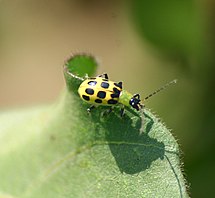
I am considering picking up some beneficial nematodes to help manage soil dwelling pests.  One reason for this is that I spotted two cucumber beetles at the end of last summer, bright beautiful little green ladybug-like beetles with 12 black spots.  While they are very pretty, these beetles are a real problem in the garden.  They eat just about any vegetable they can get to, then lay eggs in the soil, when larva hatch they too will feast on vegetables and they spread bacterial wilt and squash mosaic virus.

Spotted cucumber beetle


Cucumber beetles also have a striped species that looks similar but the spots are instead stripes that run from the head to the rear.  These guys are a real danger to a garden.  Unfortunately they are also a challenge to be rid of.  Parasitic wasps can be helpful, if you don't know how to get these, try planting flowers that will attract them to the garden.  Tiny nectar-filled flowers such as thyme, savory, dill, cilantro, parsley, yarrow, candytuft, verbena, sweet allysum and goldenrod.  If you spot caterpillars or other pest bugs with tiny white sacs attached to them leave them alone!  The sacs are the cocoons of parasitic wasps and the pests will die when they emerge, spawning a new generation of pest killers.  Another cucumber beetle predator is the soldier bug, "leather"-backed firefly-like bugs that can eat up to 100 bugs a day.  Soldier beetles are attracted to pollen and nectar filled flowers and particularly like hydrangea, goldenrod and milkweed.  Tachinid flies are also effective at managing beetle populations, and are another type of parasitoid.  Tachinids are not as preferential as other biological controls and will just as likely parasitize butterfly caterpillars.  Having a large garden variety will help to attract these pest managers.

Beneficial nematodes are microscopic roundworms that live in soil and prey on soil dwelling insects.  They are effective controls of fleas, ants, termites, roaches, flies, grubs; yet they are harmless to humans, pets, and our soil-dwelling friends the earthworms.  You can try to attract nematodes to the garden by adding plenty of compost and having rich organic soil, but this is a grab bag; you could just as easily attract pest nematodes.  It may be wiser to purchase a small package of beneficial nematodes to spread through your garden instead.

Since I live in a mobile home park that was built over an orchard in the 60s, I suspect this area was heavily treated with pesticides in the past and the likelihood of it supporting its own nematode population is fairly slim.  So I will most likely purchase them from a supplier and sow them in and around my garden and yard.  Ants are a major issue in our area, and I imagine if we had a natural nematode population that would not be the case. 

I also plan to sow a package of "Beneficial Bug Mix" flowers in the empty lot next door.  My garden lacks space to add a lot of these plants but I can at least use them to attract beneficials to the vicinity of the garden itself. 
If you plan to attract beneficials to your garden to help with pest management, you should keep a few things in mind:

-Don't spray! Insecticides will kill your beneficials, birds that eat pests, and the pests.  Let the birds and bugs do their jobs and handle the pests for you.

-Identify before you destroy.  It does you no good to attract ladybugs to your garden and then kill their nymphs because you thought they were pests.  Take time to identify bugs, if you can't then move them out of the garden and hope for the best.

-Provide what they need.  Food and shelter in the form of flowering plants, and water.  Your bugs need to drink too.

-Putting out a suet block or feeder of quality untreated bird seed will attract a variety of birds to your garden, many of which also eat pests.  You may find you have a lot of millet to pull up later in the year though.  You can also grow sunflowers and save the seed each year to offer the birds.

The garden is an environment all its own, keeping a balance between flowers and food, pests and beneficials will allow it to transform into its own natural environment that maintains its own balance rather than needing constant interventions. 


Monday, February 6, 2012

Eggs Florentine and Other Spinach Culture

Let's talk green.  Spinach, that is.  Spinach is an early spring crop,  it prefers cooler weather and will bolt when it gets too hot, you can also plant it in the Fall but if you aren't careful about timing it may still bolt.  The earliest record of the spinach plant is from China AD 647.  Since then it has been used throughout China, India, the Middle East, and was introduced to the Italians in the 9th century.  Native of Florence, Italy, Catherine de Medici was a huge fan of spinach and insisted it be served with every meal; this is why "Florentine" is the label attributed to foods with spinach added.  (BTW, all my spinach trivia is via Wikipedia's "spinach" entry)

Spinach plant, this is a much healthier plant than mine were.


Like many leafy greens spinach is said to have high antioxidant levels, it is a great source of Vitamins A, C, E, K, and the B complex vitamins.  It is also high in many minerals, and is considered to be a rich source of iron. Storage of spinach for more than a few days can destroy its nutritional value though, which is one reason to grow it yourself; fresh from the ground it is packed with vitamins and minerals.  Spinach is also one of the 12 most pesticide-laden produce products, so even if you don't grow your own organically you should always be sure to buy it organic.

Spinach comes in three primary types: Savoy, with dark green crinkly or curly leaves; Flat or Smooth, with broad smooth leaves that are easier to clean; and Semi-savoy, with less crinkled leaves this variety is a bit easier to clean than a standard savoy. 

New Zealand Spinach is actually not even closely related to spinach, it was given the name because of it's resemblance to spinach.  New Zealand Spinach leaves are eaten and have a similar taste and texture to spinach.  Unlike normal spinach it is comfortable growing in hotter climates, and is nearly untouched by slugs and snails.  If, like me, you find you lose more spinach to the slugs or bolting than you get on your plate, then New Zealand Spinach might be worth a try in your garden.

Start your spinach seeds in the ground several weeks before the last frost date, 3 to 5 weeks is acceptable.  In my garden it's pointless to start spinach this early since my garden beds don't see sunlight until April, I start spinach at the end of March.  It takes about 7 weeks to reach full size, but can be harvested a few leaves at a time after the first 4 weeks or so, when the leaves are large enough to be worth the trouble to harvest.  According to SFG standards spinach can be planted as close as 9 plants per square foot. 

At my house, early Spring is slug season so I rarely see much spinach at all.  In fact, I likely won't even be planting it this year since I lose so much to the slugs and most of the rest to bolting.  For those who want to plant it be sure to protect it from slugs, and if needed shade it from the heat to prevent bolting.  Some tips for doing this can be found in my posts "Slugs and Snails and Puppy Dog Tails" and "Bolting Is Bogus".


Since spinach is so very happy to bolt like crazy, make sure to plant open pollinated varieties and let them go to seed when they bolt.  You can essentially have free spinach seed for life!  Last year my spinach bolted the first week of June, set flowers that attracted pollinators to the garden, went to seed, and dropped the seed by early August.  Then that dropped seed sprouted just as the weather began to cool, and a second crop popped up for fall.  Not a bad system when you think about it.

As a final note, while spinach can be a bit touchy, and is appealing to certain slimy pests; it also grows quickly, is packed with nutrition, and is very versatile in cooking.  Give it a shot, and enjoy.

"I'm strong to the finish, cuz I eats my spinach!"--Popeye the Sailor Man

Sunday, February 5, 2012

Thinking on Trees

The few days of beautiful February weather got me kicked off to a good start on my yard work, which means I haven't had as much time to sit around the house and blog.

Yesterday I got the pleasure of raking the yard and laying down bark mulch, as it turns out 4 cubic feet of bark doesn't come anywhere near what I will actually need to finish the yard around our patio.  I was surprised at just how little it did cover, today I will go back to the store and get another 6 bags (since that's likely all my car can carry at once) and see how much farther it gets me.

In the meantime I am on a mission to discover what would be the best plant to put in the front of my house, where it is bare and gets no shade at all in the summer from about 2 pm to sunset.  If I can come up with something attractive with flowers or fruits that will shade the house it could make a big difference in our cooling bill during the summer heat, and provide food or bouquets or at the least a nice centerpiece to the house.  I have considered a lilac, but am thinking that it may be too slim to make much difference in shade.  I've also considered trellising grapes, wisteria, or clematis, but again I am not sure they would get large enough to provide much shade.  An evergreen could make a statement, and won't make a big mess like deciduous or fruit trees, but it also won't make a floral show in spring or fruits later in the year.  The other option that came to mind was a cherry tree, or other fruit tree that wouldn't require cross-pollination.  I'd have flowers, fruits, a mess to clean up, and a shade tree large and branching enough to make a difference.
This time of year the house is shaded, but by summer there will be nothing to keep it cool.

The annuals are not nearly so difficult to decide on since they change each year, but a tree is a big deal.  It will be there for years, and probably won't produce much for several years after planting, I need to be absolutely certain before selecting a tree to put into the yard.

When you are considering a semi-permanent to permanent change to your landscape here are some things to keep in mind:

-How big will it get?
-How much maintenance will it require?
-Will it drop fruits or leaves that need cleanup each year and do you want to take on the extra work?
-Will the planting location make a difference in other things? Will it shade the house, or garden?  Could the roots grow too large and damage sidewalks, driveways, or water pipes?
-What are you trying to gain from the planting? Shade, flowers, food, etc.
-If it is a fruit tree, will you need more than one for pollination?
-Will you move before you can reap the benefits of the plant? If you expect to move in 3-5 years it doesn't make much sense to plant a tree that won't offer much shade for 10 years.
-If you select for appearance, be sure to take the time to find out if your tree or shrub is native, and if it has many known pests or diseases.  If you select something for its health to begin with, you will have fewer worries later on.

The Arbor Day Foundation can be a great resource for learning about trees, and even offers 10 free trees selected for your area as a membership incentive (they also offer member discounts for the purchase of trees). This can be a great way to get some trees started in a larger landscape, or you can ask friends or neighbors if they'd be interested in sharing your 10 trees.  The small donation/membership cost is worth it if you are planning to add trees to your yard, but aren't necessarily seeking specific types.  When I joined a few years ago it was primarily just to make a donation to what I felt was a worthy group, I ended up sending my free trees to my nephew who has several acres and raises fowl as well as a garden, he made good use of the trees which I didn't really have the space for at the time.

I am definitely leaning toward a cherry tree, however there is some debate over what type; my daughter likes sweet cherries, while I prefer to preserve pie cherries. There are combination trees available, but I have never seen one that did as well as separate sweet and sour trees.  Next stop, check with the local nursery on good selections for our area, and do a little research on planting a new fruit tree.


Monday, January 23, 2012

Slugs and Snails and Puppy Dog Tails

Just a quick post to address some of the most likely pests you'll have issue with in the garden.  Most garden pests are particular, tomato hornworms won't eat your lettuce, aphids may just stay centrally located on your rose buds, cabbage moths will lay their eggs primarily on the brassicas.  There are a few very common, very indiscriminate ravagers that you may come in contact with though: slugs and snails and pets.

Non-gardeners don't tend to think about pets as being garden pests, but take the word of someone with three cats: they can be the most destructive pests of all.  Nothing taunts a cat into tearing up tiny baby transplants like the soft, freshly turned dirt in a garden.  It calls to them to be turned into their own private toilet.  One of my cats even enjoys nibbling on the plants themselves.  Dogs can be a problem too, if your garden is in an area where your dog runs free it looks like no more than the perfect place to dig, poop, and roll around.  There are many suggested ways to keep pets out of the garden beds.  They range from motion detecting sprinklers, to hot pepper sprinkles, to sticking skewers point-up throughout the bed.  I've tried a few of these options, the sprinkler didn't make sense since my garden is so small and the cats enjoy the patio without causing any damage.  The skewers did work but I stabbed myself with them while weeding more often than I liked.  I was not willing to possibly do real harm to the kitties with hot peppers though.  This year I will go with what seems to me to be the most practical solution, it won't hurt them, or the plants, and isn't terribly expensive either.
This year I will build 4'x4' frames of 2"x2" wood posts, and wrap chicken wire around them in a small dome.  These covers will let light and water through to the plants, but keep out the destructive cats and as a bonus any other critters larger than a mouse.  They also can work as handy frames to stretch plastic or floating row cover over if needed.

Slugs and snails are a huge menace to new transplants as well, and are most prolific just when plants are put into the ground in the springtime.  Again, there are probably about half a million suggested ways to deal with these menaces.  I prefer to bait for them with organic-approved slug bait to keep the population in check.  You can also use beer traps, boards, and copper to manage them.  Beer traps are one of the best known ways to rid yourself of slugs, they are shallow dishes buried to soil level and filled with beer.  Apparently slugs have a real taste for beer and will drown themselves trying to drink it.  For a more hands on approach, and one that won't leave your garden full of beer dishes, you can lay a board across the soil and leave it overnight.  Each morning lift the board up and pick off the slugs that have taken shelter under its shade, then squish them or move them somewhere far away from your plants.  The one other method I've heard of to keep slugs and snails out of the garden is to surround plants with copper, which supposedly gives them a little shock if they slide over it.  I have yet to try this one out, so can't guarantee its effectiveness.  However, you don't have to go buy special copper tape for this method, you can lay down a circle of pennies that touch each other around each plant.  Some combination of any or all of these methods should keep even the sluggiest garden safe.  I plan to give the pennies a try this year; I'll bait like usual and then surround a few plants with pennies to see if it makes a difference in the amount of damage done.

Happy Gardening!