Showing posts with label colcannon. Show all posts

Friday, May 18, 2012

Cooking With Coles

Some of my favorite ways to eat broccoli, and cauliflower are fresh from the garden in salads or as a vegetable tray, or steamed lightly as a side dish.  Obviously those are the easiest ways to make them, but sometimes you have to get creative to get a whole harvest eaten before it's too late; or you need to preserve them for later in the year.

My all-around favorite way to use up brassicas is Colcannon.  Colcannon is traditionally made from mashed potatoes and kale (or cabbage), with scallions, butter, salt and pepper added. It can contain other ingredients such as milk, cream, leeks, onions and chives.  It is an Irish food, and is traditionally served on Halloween.
  • 1 pound cabbage, broccoli, kale, cauliflower
  • 1 pound potatoes
  • 2 leeks
  • 1 cup milk
  • salt and pepper to taste
  • 1 pinch ground mace
  • 1/2 cup butter
  1. In a large saucepan, boil brassicas until tender; remove and chop or blend well. Set aside and keep warm. Boil potatoes until tender. Remove from heat and drain.
  2. Chop leeks, green parts as well as white, and simmer them in just enough milk to cover, until they are soft.
  3. Season and mash potatoes well. Stir in cooked leeks and milk. Blend in the vegetables and heat until the whole is a pale green fluff. Make a well in the center and pour in the melted butter. Mix well.
Colcannon pretty much amounts to mashed potatoes and veg.  It is very tasty and can use up pretty much any cole crops you have in excess, it also freezes well for use during the winter when you may feel like something warm and hearty but not feel like spending the time to cook it.

Since I usually eat my broccoli fresh or steamed with little additional flair I don't have a broccoli-only recipe to share, but the recipe below looks good and i plan to try it out when the broccoli are ready.

Awesome Broccoli-Cheese Casserole

For a change in tempo, this is a spicy recipe from India for cauliflower.  The recipe I found online has several vegetables in it, but the proportions can easily be adjusted, for cauliflower bhaji just replace the potatoes with more cauliflower.

Indian Vegetable Bhaji

No one in my family likes coleslaw, except my husband.  He is a slaw fiend and after much browsing last year I found the perfect recipe for him.  There are several comments about this recipe being too sweet, so if you try it you may want to put in about half the sugar initially, then add a bit and taste until it is the sweetness you prefer.  Coleslaw is a great way to use up cabbage, especially since cabbage doesn't freeze well.

Sweet Restaurant Slaw

For fresh use these recipes are some different ways to use your harvests.  The colcannon, bhaji, and casserole should even freeze well.  Now what do you do when you have so much harvest you can't eat it all before it goes bad? Or if you want to save some for later in the year?

 Cabbage is not very freezable as far as I know, it can be preserved as sauerkraut though.  I've never tried this, but my sister has and apparently sauerkraut is a hit or miss.  It is made by fermenting and canning the shredded cabbage.  If you have a lot of cabbage and no way to eat it before it spoils give sauerkraut a shot, but be warned it may just spoil rather than coming out right.  Cabbage can be frozen in recipes, like colcannon.

Broccoli and cauliflower should be picked early in the day, washed thoroughly in cold water, chopped into small pieces (florets), then blanched for 1-2 minutes in boiling water.  The broccoli will turn a bright green.  Immediately move the florets to ice water for a couple minutes to stop the cooking process.  Drain the florets and place in freezer bags; if you want to do gallon freezer bags, freeze the florets in a single layer on cookie sheets first then bag them.  This keeps them from becoming one big mass of frozen vegetable, and makes removing a serving size easier.  Label with the name of the vegetable, variety (if you are doing more than one variety), and the date. 

One other way to preserve cabbage, broccoli and cauliflower is as pickled vegetables.  Picalilli is a well-known type of pickled mixed vegetables.  There are dozens of different recipes available for pickled vegetables, personally I'm not a fan.  Though I do like Refrigerator Pickled Vegetables, but they don't help much when it comes to preservation.

A good book to check out for recipes and directions for preserving any harvest is Putting Food By, which even includes directions on root cellaring and drying brassicas.

And lastly, since I didn't discuss it on the culture post we will cover seed saving from brassicas.  After flowering, leave flower stalks on the plant until they make seed pods that are nearly dry, before they dry completely cut the stalks off and place in a large paper bag, seed pods down.  Leave the bag in a warm, dry area for a few weeks, you'll know they are ready when a gentle touch will cause seeds to drop from them.  Strip the seeds and pods off the stem into the paper bag.  Remove the stem and shuffle the rest around in the bag, this should loosen up any seeds still attached to their pods.  Get a clean dry bucket and set it outside on a day with a nice breeze.  Slowly pour the seeds and chaff into the bucket from about a foot above it.  As they pour the chaff will be blown away by the wind and the seeds will drop into the bucket.  If you still see chaff, dump the bucket back into the bag and repeat pouring.  Pretty quickly you will see only seeds.  Store seeds in a paper envelope or bag in a cool dry place, labeled with the species, variety, and year.  Brassica seeds will keep for up to 3 years.

If you have a brassica recipe or preservation technique you'd like to share, please leave a comment below.


Thursday, March 1, 2012

Potato Culture

There is a wealth of information out there about potatoes, the Wikipedia entry alone is full of potato facts.  In fact, reading up on them has given me a whole new appreciation of french fries.  It's kind of amazing to think that the potato we eat today is the descendant of potatoes first cultivated between 7 and 10 thousand years ago in Peru and Bolivia.  Even more amazing is that there are over 5000 varieties of potato today 99% of which were developed from a subspecies that grew in south central Chile.  That's quite a history.  The Spanish brought the potato home with them after their conquest of South America.  From Spain and other ports of Europe the potato spread across the world and today it is eaten in nearly every nation on the planet. 

One of the reasons for its popularity is that the potato is well-adapted to most climates; it can also be grown in a backyard garden in quantities adequate to provide for a family's sustenance; it grows easily; and is much less expensive than grain crops.  The potato has been a crop to grow at home for centuries, since potatoes have particular storage requirements they didn't keep as well as cereal grains and therefore were less market-worthy and more likely to be found in individual gardens.  This is part of what led to the Irish Potato Famine, the poor Irish tenant farmers fed their families on milk and the potatoes they grew on their small allocated plots.  Nearly all of the potatoes grown in Ireland at that time were a variety known for large harvests, which made sense when you were short on growing space and had a family to feed, but not at all resistant to late blight.  A particularly nasty year led to rampant infections of late blight taking out nearly one half of the potato crop in Ireland; and leading to the deaths of nearly a million Irish, and the emigration of more than a million others, effectively reducing the population by 20-25%.

Potato plants
Why mention the Irish Potato Famine in a blog post about potato gardening? Yeah, it is a little morbid.  But it's an important example of the folly of dependance on a single cultivar, or a single staple crop even.  Genetic diversity in food crops is something to be coveted, having a multitude of available cultivars offers people protection in the event of another devastating loss like the Potato Famine.  With that in mind, if you plan to grow potatoes, make an effort to try some lesser known varieties and get familiar with potatoes all over again.  One of the major reasons Russet potatoes are so common in grocery stores is not their flavor, or nutrition, or ease of production.  Can you guess why the Russet is found everywhere?  Because it can be shipped everywhere.  Russet potatoes are one of the longest-storing varieties, they can be bounced around, stored for months, and are none the worse for wear.  I am looking forward to getting familiar with my German Butterball potatoes, and learning what traits they have to offer other than shipping stability.

I recommend doing further reading on Wikipedia to learn more about the history of this plant, but I think I should move on to growing information at this point.

Potato plant in planting bag
Potatoes are grown from "seed potato" which is not a seed at all, it's a potato.  The "eyes" on a potato sprout and grow into a new plant.  You don't even need whole potatoes for this, just chop them into chunks with at least one eye on each.  Bury them in rich soil about 6-8" deep.  Keep them well-watered, with good drainage to avoid overwatering. 

Potato growth happens in 5 phases: first sprouts grow from the seed potatoes and roots begin to grow as well.  The second phase involves photosynthesis as the plant's leaves grow.  Phase 3: stolons develop from lower leaf axils on the stem and grow downwards into the ground and on these stolons new tubers develop.  Often, this phase is also when flowering occurs.  Tubers will stop forming when the temperature hits 80 degrees, this is why potatoes are considered cool weather crops.  The next phase involves the tubers growing larger.  The final phase involves the leaves and stems dying back, the skins of the tubers hardening, and the tuber sugars converting to starches.  You can harvest at this time, or during the fourth phase you can hand-harvest "new" potatoes while leaving the plant to continue growing more.

An important thing to remember about potatoes is that they are from the nightshade family and do contain small amounts of the toxin solanine.  To ensure that you don't become sick from your potatoes, never eat green potatoes.  Tubers will turn green when exposed to light; in the garden you can prevent this by keeping tubers that show above ground covered with dirt or a heavy mulch; once harvested store potatoes in a brown paper bag to reduce light exposure.  Also, after flowering the potato plant may develop fruits on it, these are toxic and should not be eaten.  For the home garden it may be best to pick all of the potato flowers when they fade to prevent accidental ingestion of the fruits by children or visitors.  Potatoes are generally cured in order to allow for skin-set, and increase storage capability.  Similar to winter squashes curing is done by setting them out in a warm, almost hot! place for several days.
Potato flowers

Potatoes make a very pretty flower and could be interplanted with annual or perennial flowers easily, without it being obvious that they are food plants.

I hope this has been as helpful to you as it has to me, and look forward to getting my potatoes started and seeing how well they do. 

Monday, January 23, 2012

Kale, Kale, Rock N Roll!

One of the few things that you can still be harvesting in January is kale.  Kale is a relative of broccoli and cabbage, a brassica.  In moderate climates you can grow kale nearly year round.  It has few, if any, issues with pests and disease.  Kale is incredibly high in nutritional value as well, being a dark leafy green.  So why isn't kale grown in every garden all year?  Many people don't know much about it, or have no idea what to make with all of that kale.  Like the rutabaga, kale has gotten a bit of a bad rep.

Since kale really does grow so easily I really don't need to go into much detail on kale culture, just give it dirt, water and sunshine.  It should start easily from seed and can be grown almost any time of year; obviously not during a heavy freeze, or major drought.  Since kale doesn't need much detail regarding care, the more important question to answer is "what do I do with all that kale?".

One option is lizard food.  Anyone who has a vegetarian reptile, such as an iguana, knows they require dark leafy greens in their diets to stay healthy.  So feel free to donate your bumper kale crop to a friend with an iguana.

Kale is not like lettuce, it has a much tougher texture and is not as good fresh eating.  Instead it should be cooked and added to foods.  It can be added to soups, casseroles, colcannon (a great vegetable and mashed potato dish), or wilted and served as a side dish.  It will wilt quickly and should be kept in the coldest part of your refrigerator.  When grow in colder weather it is sweeter, if grown during the summer heat it will become bitter.  The one thing to watch out for is to wash it really well, the deep ruffles in kale leaves often collect dust and grit.  Wash well and enjoy.

Here are some of my favorite uses for kale:

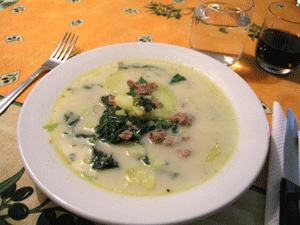
Olive Garden's Zuppa Toscana Soup


Colcannon


Bobby Flay's Sauteed Kale

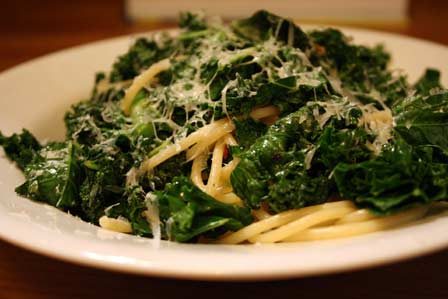
Spaghetti With Kale and Sun-Dried Tomatoes


Vegetable Barley Soup


Kale is a great way to add some nutrition and color to just about any cooked dish.  Good luck with your kale cuisine!